


Cute AI - Immersive Chat
4.62.03K Reviews
App Specs
- Version
- 2.4.1
- Updated On
- License
- Free
- Downloads
- 500,000+
- Developer
- Shifa'ul Asqam (The Complete Diwani)
- Categories
- Entertainment
- Platform
- Android
Screenshots

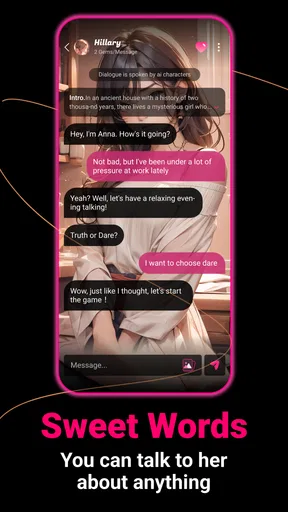
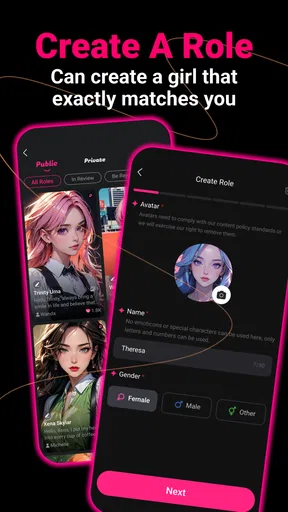

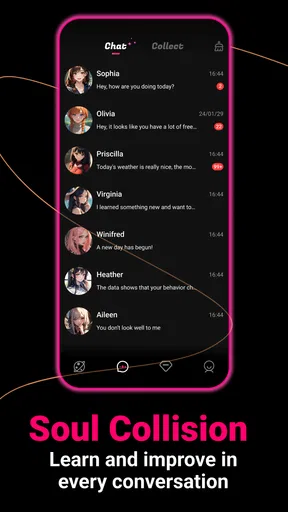

 Analysis by AppCompare
I approached Cute AI - Immersive Chat as a casual entertainment app rather than a serious productivity assistant. Its central appeal is simple: it offers whimsical chat adventures built around a cute AI style, giving you a more playful way to spend a few minutes in conversation. That sounds modest, but it matters. Many AI tools feel designed for work, research, or efficiency; this one is aimed at people who want interaction with a lighter, more imaginative mood.
My first impression was that the app is easiest to understand when you stop expecting it to behave like a conventional messaging service. The attraction is not just sending questions and receiving practical answers. It is the atmosphere of the exchange, the feeling of stepping into a small conversational scenario, and the possibility of seeing where an unusual prompt leads. That makes it a better fit for entertainment than for dependable information.
The app belongs to the entertainment category and comes from Shifa'ul Asqam (The Complete Diwani). It is free to start, carries a Mature 17+ content rating, and has reached over 500 thousand installs. Its average rating is 4.6 from around 16 thousand ratings, with about 2 thousand written reviews. Those figures suggest that the concept has found a substantial audience, although popularity alone does not guarantee that every conversation will feel equally engaging.
What the free starting point really offers
The most important cost detail is that the app can be downloaded and used without an upfront purchase. That makes experimenting relatively easy: you can see whether the conversational style suits you before deciding whether it deserves any money. For an entertainment app, this is a sensible arrangement because the value is subjective. One person may enjoy returning to playful chats, while another may lose interest after a short session.
There are in-app purchases priced from $2.99 to $49.99 per item. I would treat that range as a reason to explore the free experience carefully rather than assuming that paying is necessary. The free entry point answers the basic question—whether the tone and interaction appeal to you—while the paid layer is something to consider only after you understand how often you would actually use the app.
The current version is 2.4.1, and the app supports devices running Android 7.0 or later. That broad compatibility is useful for people who do not own a recent phone, though the experience can still depend on the device, connection, and how comfortably the interface runs on a smaller screen. I would check the age rating before installing it on a shared family device, especially if younger users might open it casually.
One practical habit helps here: use the app for several different kinds of sessions before spending anything. Try a short conversation when you are relaxed, then try again with a more specific imaginative prompt. If the appeal depends entirely on the first novelty, purchasing extra content may not improve the long-term experience. If you naturally invent new scenarios and return to continue them, the paid options may feel more relevant.
Worth Reading Before You Choose

EA SPORTS FC Mobile 26 Is a Bigger Football Game, but It Takes Time

Flipboard Shows What News Apps Must Do Beyond the Feed

Switching to Android Auto Means Rethinking Your Driving Routine

Google Calendar Makes a Crowded Week Easier to Manage

Ludo King Makes the Most of the Minutes Between Plans

Baby Panda World Brings Quick Play to Modern Phones, but Its Game Library Feels Busy
How I judge the entertainment value
The app works best when I approach it with an open-ended prompt instead of a question that has one correct answer. Asking for a playful situation, a character reaction, or a surprising continuation gives the conversational format room to work. By contrast, using it as a replacement for a search engine creates the wrong expectation. Even when an answer sounds confident, the entertainment value is more dependable than the factual value.
A realistic everyday use case is a short break between tasks. Imagine having ten minutes before leaving for an appointment: rather than opening a social feed and scrolling without direction, you can start a small fictional chat, ask the AI to introduce a twist, and stop when the conversation has run its course. That kind of session is where the app makes sense. It gives the break a beginning and a theme instead of asking you to commit to a long game.
It can also work as a prompt generator for creative hobbies. I found the most useful approach was to ask for a setting, then add one constraint of my own. For example, I might request a strange meeting place and then require the scene to remain cheerful or solve a small problem. The constraint makes the exchange feel less random and gives me something to react to. This is a more rewarding workflow than repeatedly typing vague requests and hoping the AI produces something memorable.
Another non-obvious strength is that the app can serve as a low-pressure rehearsal space for imagination. You do not need to prepare a full story or understand a complicated game system. You can test a character idea, change the mood, or ask what might happen next. That makes it approachable for someone who likes interactive fiction but does not want to learn rules, manage inventories, or follow a large map.
Where it differs from ordinary alternatives
Compared with a standard chatbot, the appeal here is the playful framing. A general-purpose assistant is usually better when I need a clean explanation, a structured plan, or a direct answer. Cute AI - Immersive Chat is more appealing when the journey matters more than the result. Its conversational identity encourages me to respond in character and explore a mood instead of treating every message as a task.
Compared with a conventional mobile game, it is less demanding. There is no need to master controls or wait for a particular level of skill before enjoying the interaction. The trade-off is that people who want clear goals, visible progression, competitive pressure, or a carefully authored plot may find the experience too loose. A story-driven game provides stronger direction; this app provides more freedom but also asks you to supply more of the momentum.
It also differs from social networking. The interaction is available without the unpredictability of a public feed, but it does not replace genuine conversation with friends. If your main goal is sharing real events, receiving human advice, or building a social circle, a messaging or community app is the better choice. This app is for solitary entertainment, not a substitute for relationships.
The key trade-off is freedom versus consistency. A flexible AI conversation can surprise me, but it can also wander, misunderstand a prompt, or lose the tone that made the opening appealing. A fixed story rarely has that problem because its scenes were designed in advance. I would choose this app when I want to steer the experience myself, and a traditional narrative game when I want polished pacing and a guaranteed arc.
Small techniques that make chats better
The first technique is to establish the tone immediately. Instead of writing only “start a story,” I would describe the mood, the kind of response I want, and the role I am playing. A short instruction such as “keep this friendly, curious, and lightly mysterious” gives the exchange a clearer identity. It also makes it easier to notice when the conversation has drifted and correct it without abandoning the scenario.
The second is to treat each chat as a scene rather than an endless conversation. Give the interaction a small objective: discover why something happened, choose between two options, or help a character reach a place. Once that objective is complete, ending the session can feel satisfying. Without a boundary, playful chats may become repetitive because every message simply asks for another continuation.
The third is to keep a personal set of prompt ingredients. I would remember a few settings, character traits, and restrictions that worked well, then combine them differently on later visits. This turns the app from a one-time novelty into a repeatable creative toy. It also reduces the common frustration of opening an AI chat with no idea what to say.
A fourth useful habit is to correct the app early and plainly. If it changes a character’s personality or forgets the intended mood, I would restate the important detail in one sentence rather than writing a long explanation. This does not guarantee perfect continuity, but it gives the conversation a better chance of recovering. Users who dislike steering an AI may find this effort tiring, while users who enjoy improvisation may see it as part of the fun.
Limits that should shape your expectations
The mature age rating is not a detail I would ignore. It means the app should not be treated as a children’s entertainment download, even though the word “cute” may suggest something harmless at first glance. Parents and guardians should make their own decision about access, and I would avoid handing the phone to a younger child simply because the interface feels playful.
The free model is convenient, but the presence of purchases changes how I would use it. I would not assume that every appealing part of the experience is included at no cost, and I would avoid buying impulsively during a particularly engaging conversation. The sensible test is whether the free access already gives you a reason to return. If it does not, paid items are unlikely to solve the basic mismatch.
There is also a personal-energy trade-off. An immersive chat can be relaxing when I want a quiet distraction, but it can become less enjoyable if I expect it to carry the entire experience without input from me. This is not a hands-off game. The more specific and imaginative my participation, the more likely the session is to feel distinctive. Someone looking for automatic entertainment may prefer a video, podcast, or linear game instead.
I would also keep the app in its proper role. It is not the tool I would choose for sensitive decisions, professional guidance, or information that needs careful verification. Its strongest promise is imaginative interaction, not authority. That distinction prevents disappointment and makes the free trial more useful because I am judging it by the right standard.
Who is most likely to enjoy it
I think the best audience is people who enjoy character-driven conversation, improvised scenes, and short creative diversions. It may appeal to readers who like interactive fiction but want something more spontaneous, as well as casual players who prefer conversation to reflex-based challenges. It can be especially pleasant for someone who wants to explore ideas privately before turning them into a story, drawing, role-playing session, or writing project.
It is also a reasonable choice for users who want entertainment that can fit around an irregular day. You can begin with a small prompt rather than committing to a campaign or a long episode. That makes it easier to use during a commute, a quiet evening, or a brief pause, provided you are comfortable with an experience that may not deliver the same result every time.
I would recommend caution for anyone who wants dependable continuity, a carefully controlled tone, or a clear completion target. Players who measure value by levels, unlocks, challenge, or authored storytelling may feel that the app lacks structure. Likewise, users who mainly want factual answers should choose a general assistant or a trusted reference source. The cute presentation does not change those fundamental differences.
The age rating also narrows the audience in an important way. Adults can decide whether the tone suits them, but it should not be presented as a child-friendly substitute for a supervised game. If several people use the same device, I would make sure the account and purchase settings are handled deliberately rather than assuming the free download makes the app risk-free for everyone.
My value judgement and final recommendation
After weighing the free access against the paid purchase range, I see this as an app worth trying, not an app I would tell everyone to buy immediately. The no-cost starting point lowers the risk, and the whimsical chat format offers something different from a standard assistant, a social feed, or a traditional game. Its value grows when you enjoy supplying prompts, shaping scenes, and returning to familiar imaginative patterns.
I would keep using it if I wanted a private creative distraction and found myself naturally thinking of new scenarios between sessions. In that situation, a paid item could be reasonable because it would support an activity I already enjoy. I would skip the purchase if I was only curious about the novelty, if I needed reliable answers, or if I wanted a game with firm goals and predictable progression.
My final verdict is positive but specific: try the free experience first, then pay only for proven personal use. The strong user response, broad install base, and current 2.4.1 release make it an established option in its niche, but the niche matters. This is not a universal AI utility. It is a mature-rated entertainment app for playful, user-led conversation, and it delivers its best value when you treat that limitation as the point rather than expecting it to become something else.
Pros
- Engaging character conversations feel personal and easy to start.
- Wide variety of personalities supports different chat preferences.
- Simple interface makes navigation comfortable for new users.
- Creative roleplay can provide entertainment and writing inspiration.
- Chat sessions are convenient for short breaks or casual interaction.
Cons
- Some characters or features may require in-app purchases.
- AI replies can occasionally feel repetitive or lose context.
- Privacy concerns may arise when sharing personal information in chats.
- The experience depends heavily on a stable internet connection.
- Conversations may not always match the intended emotional tone.
FAQs for Cute AI - Immersive Chat
What is Cute AI - Immersive Chat and how does it work?
Cute AI - Immersive Chat is an AI conversation app designed around engaging, character-based chats. After opening the app, users can select or interact with virtual personalities and send messages in a conversational format. The experience is intended to feel more immersive than a standard chatbot, although the quality and personality of replies can vary depending on the character, prompt, and conversation context.
Is Cute AI - Immersive Chat free to download and use?
The app may be available to download at no initial cost, but some features can require in-app purchases, a subscription, credits, or other usage limits. Before starting an extended conversation, check the current pricing shown in the app store and inside the application. Availability of premium characters, longer chats, exclusive responses, or other benefits may differ between free and paid users.
Does Cute AI - Immersive Chat support private and secure conversations?
Users should review the app’s privacy policy and permissions before sharing personal information. AI chat services may process messages, account details, device data, and usage information to operate or improve the service. Avoid entering passwords, financial information, private identification details, or sensitive personal situations. Also remember that conversations with an AI character are not the same as confidential communication with a professional.
Can users create their own AI characters or customize conversations?
The available customization options depend on the current version of Cute AI - Immersive Chat. Some experiences may provide predefined characters, while others can include adjustable personalities, role-play settings, conversation themes, or user-created profiles. Check the character creation and chat settings after installation to see which tools are available, because certain customization features may be restricted to premium accounts.
Is Cute AI - Immersive Chat suitable for children and teenagers?
Parents should check the application’s official age rating, content description, and privacy terms before allowing a child or teenager to use it. Character-based AI conversations can sometimes produce unexpected, mature, emotional, or inaccurate replies, even when the user does not request them. Younger users should use appropriate parental controls, avoid sharing personal information, and understand that AI responses are generated rather than provided by a real person.


